By Igor
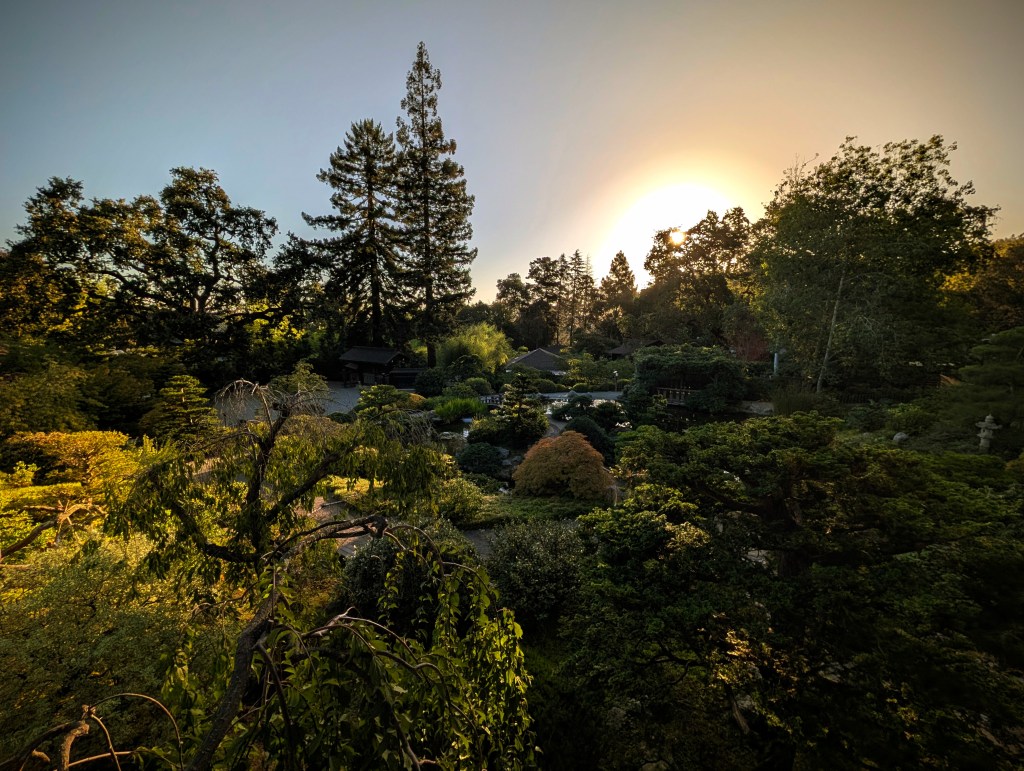
I’d like to share 4 realizations that highlighted my meditations here at Hakone Gardens.
Presence
The first realization is about presence.
I noticed that the more I focus on observing my thoughts, the quieter they become. It’s almost impossible to truly hear the world around, while my mind is busy replaying yesterday or planning tomorrow.
And every time I’m becoming an observer of my thoughts, I suddenly start hearing beautiful songs of birds in this peaceful garden.
It feels as if I had been wearing invisible headphones, listening only to noise inside my own head. But as I observe my thoughts and they become quieter, it’s like I’m finally taking those headphones off and begin hearing the world as it actually is.
The birds had been singing all along.
The water had been flowing all along.
The only thing that has changed is my attention.
To me, hearing the birds has become a beautiful sign that I am truly present during meditation rather than being consumed by my thoughts. And many of those thoughts, if I’m honest, are repetitive worries, expectations, or imaginary conversations that don’t really change anything.
That led me to a paradox.
Isn’t it fascinating that we often need to practice meditation just to begin fully experiencing the life that has been happening around us all along?
Power of our thoughts
My second realization is about the power our thoughts have over our lives.
Meditating regularly for the past six years has taught me that although I cannot always choose which thoughts appear, I do have influence over where I place my attention.
If I constantly focus on what is missing in my life, my mind naturally creates dissatisfaction.
But if I intentionally focus on what is already here—my health, the absence of pain, my ability to walk, breathe, and see, the people I love who are still with me, the opportunities I have, and the experiences I’ve been fortunate enough to live through—my emotional experience changes.
The external world hasn’t changed.
Just like in the previous example, only my attention has changed.
And when our attention changes, our experience changes.
For example, at my first software engineering job back in Russia, I earned about $3,000 a year. I believed that if my salary simply doubled, I would be truly happy.
But as my income kept growing, it didn’t make me satisfied.
I was fortunate to work at great companies like Netflix, Google, Snapchat, Meta. My income increased by more than 100 times. I moved to the country of my dreams.
Yet none of those external achievements brought me lasting satisfaction…
However, just a few minutes of meditation can bring me back to a deep sense of peace with what I already have. Especially if I finish my meditation with gratitude.
I’ve come to believe that gratitude, rather than achievement, has the greatest influence on how we feel.
The less we demand from life, the more we appreciate what life is already giving us, and the happier we become.
The sustainable path
While sitting here meditating, I could hear loud motorcycles riding toward Skyline Boulevard.
It made me realize that people all over the world are searching for the same calm state that we practice during meditation.
Some find it while skiing, climbing mountains, or riding motorcycles at high speed.
I’ve enjoyed those activities myself, so I know what they feel like. During those moments, there isn’t much room for endless mental chatter because attention becomes completely absorbed in the present moment.
Others seek temporary relief from their thoughts through smoking, alcohol, or other substances.
I’ve tried those as well.
Isn’t it remarkable that people spend so much time, money, energy, and even their health searching for moments when the mind finally becomes still, while humanity has had perhaps the cheapest and most reliable tool for achieving that state for thousands of years?
Many people say they don’t have time to meditate because life is too busy, yet they spend countless hours chasing that same feeling in less sustainable ways.
Meditation isn’t the easiest path.
Like going to gym, it requires patience and regular practice.
But unlike many temporary escapes, it develops something inside us that stays with us.
It’s strength training for the mind.
The Middle Way
My fourth realization is about the Middle Way.
Most of us naturally see ourselves as somewhere in the middle of whatever we do.
My wife and I were discussing that, for many people, our regular meditation practice might sound excessive.
But it’s worth realizing that the majority of people are actually trying to quiet their minds in one way or another.
That is exactly what we are learning to do through meditation.
And that sounds very much like the Middle Way that Buddha described thousands of years ago.
We are neither putting our bodies in constant danger through extreme activities nor constantly chasing pleasure through endless stimulation, because neither extreme is sustainable.
Instead, we’re cultivating a peaceful and sustainable way of living.
So perhaps true lasting happiness comes from learning to quiet our thoughts, directing our attention toward what we already have through gratitude, choosing sustainable paths to joy, and walking the Middle Way.
For the past six years, I’ve tried to meditate twice a day at home. Sometimes I skip sessions, and honestly, even fifteen minutes of meditation isn’t always easy for me.
Yet here we practiced for three hours… And I genuinely enjoyed it.
Plus during that long meditation here this June, I had a vivid image of my next book.
It will be called “Thoughts & Joy”.
Its central idea is very simple: Joy is not something we create.
More often, it is something we uncover when we gently quiet the noise inside our minds and begin paying attention to the extraordinary life that has been here all along.
 Hakone Zendo