Category: zen
-

Omotenashi おもてなし
Shared by Kaz Omotenashi has been part of Japanese culture for a long time. Omote means front, nashi means nothing. Omotenashi means from the bottom of the heart, sincere. Omotenashi is an important concept from the tea ceremony which is closely related to zen. The host who is serving tea and the guest are treating…
-
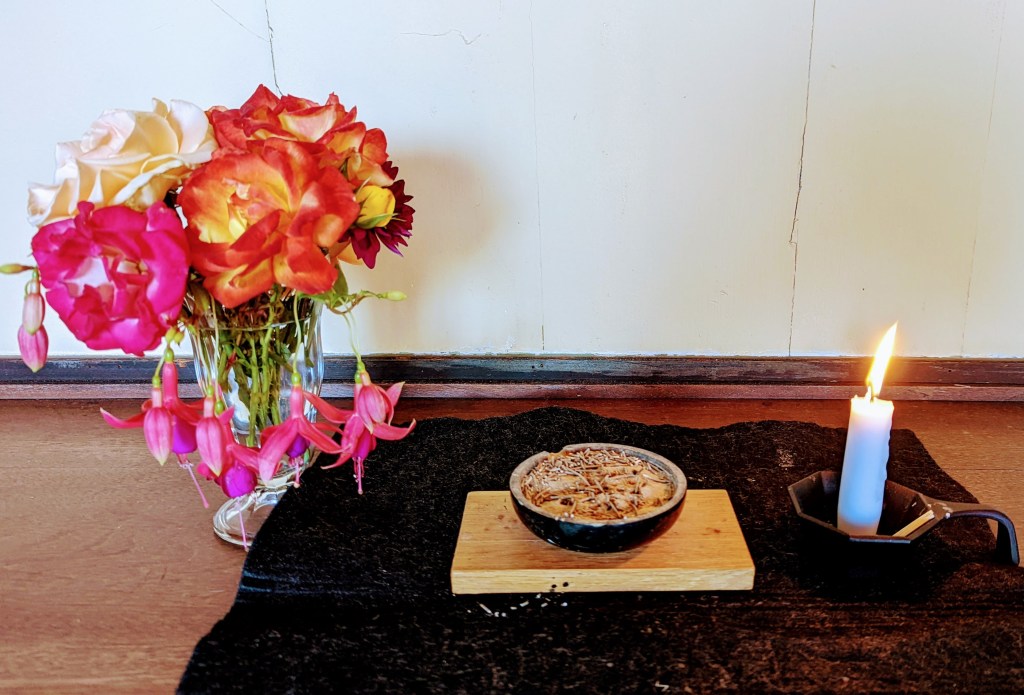
Don’t try to ride two horses at the same time
Talk by Ann From Daily Sutras (禅宗日課聖典) Know! You are the Light itself Rely on yourself Do not rely on others. The Dharma is the Light Rely on the Dharma Do not rely on anything other than the Dharma. Rev Ito, the founder of our zendo, used to tell Ann, “Don’t try to ride two…
-

色即是空・空即是色
shiki soku zekuu ・kuu soku zeshiki Shared by Jia This calligraphy by Rev Ito hangs in our zendo. Jia shared the meaning of this phrase. 色即是空・空即是色 is a phrase from the Heart Sutra(般若心経). It means Form is Emptiness, and Emptiness is Form. Emptiness is a crucial concept in Zen. To me, it has two folds of…
-

Empathy
Oscar talked about empathy. With the current state of the world and our country, I find myself feeling angry at myself and feeling useless and powerless for nothing being able to make any changes. Through meditation I found out that the difference I can do is to reduce hate in the world. But how do…
-

Desire
Talk by Chris What is the source of desire? How are we to act on our feelings of desire – how we want ourselves or others to behave? Chris shared a story about a neighbor who, many years ago, hosted a loud party. They informed Chris the day of the event that they would be…
-
Shujinko 主人公 : True Self
In zen teaching, shujinko means “true self.” So how can we find our “true self”? 無想 Muso: Don’t think anything, get rid of all thoughts 無念 Munen: Let go of desires, don’t get distracted by the stimulus from the outside world 無住 Muju: Let go of your attachment to material things What remains is the “true self.” Zazen…
-

Two Approaches to Happiness
Talk by Lakshmi There are, we could say, two basic approaches to manifesting a happier, more fulfilled life. The first and most familiar to us is to try to maximize the quality of our day-to-day experiences and circumstances as best we can. However, one of the inherent challenges of trying to engineer or control our…
-
Be with the desire
We had a discussion on desire led by Chris. Have you watched the groundhog day movie? You wake up and
 Hakone Zendo