By Kaz
It was a privilege to sit with all of you this morning for our final session of the year. As we look back on our time together at Hakone Zendo, I wanted to share a personal experience that has deeply shifted my perspective on our practice.
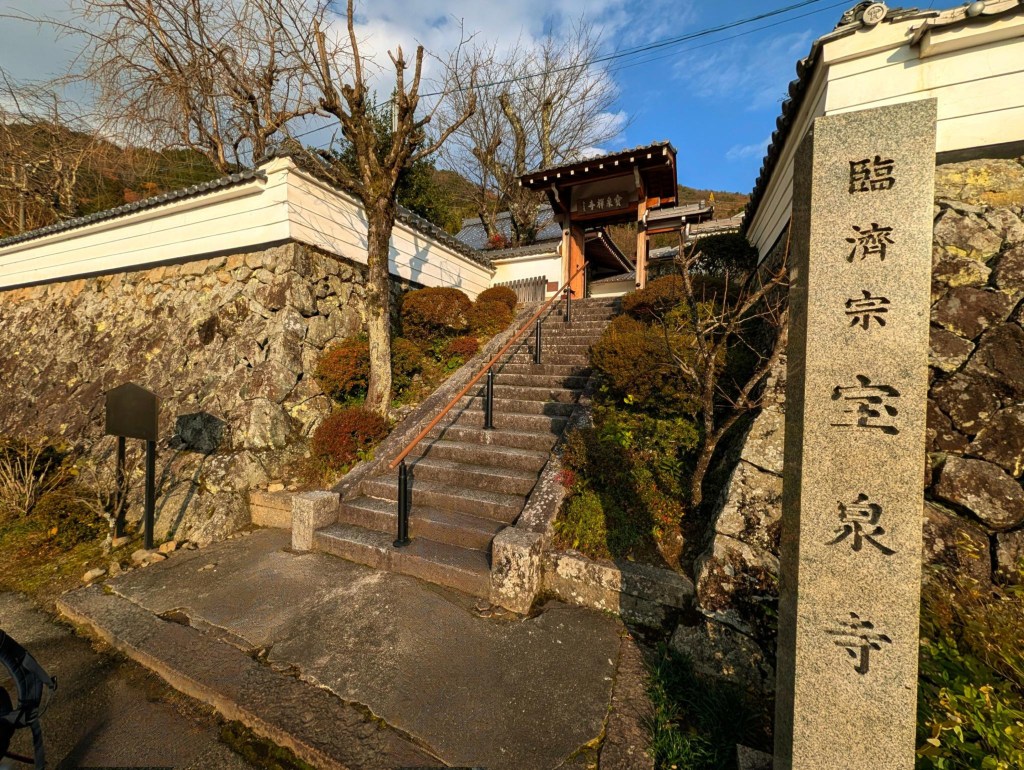
Two weeks ago, before a business trip, I traveled to Kyoto for a four-day intensive training at a Rinzai temple called Hosen-ji. Although I’ve been sitting here for almost fifteen years, I had never undergone formal monastery training in Japan. I wanted to see, firsthand, how the monks are trained and bring that energy back to our community.
During my time there, the Abbot spoke about a concept that resonated with me: the balance of Sugar and Salt.
In Rinzai training, you need both. The Salt is the discipline—it is hard, sharp, and sometimes uncomfortable. The Sugar is the kindness, the support, and the soul of the practice. At Hosen-ji, I experienced both in ways I didn’t expect.
The Salt: The Sting of Discipline
Our day started at 5:30 AM. It was freezing—literally 0°C. We practiced Taichi and Ritsu zen outside with no socks, no gloves, and no hats. My fingers were numb. We’d go straight into 75 minutes of Zazen, followed by chanting, cleaning, and even “HIIT” hill runs as a warm-up before samu. We had evening sitting as well and In total, we practiced about 10 hours a day.
But the most difficult “salt” wasn’t the sitting—it was the eating. There is a very strict discipline to how you handle your bowls and chopsticks. If you make even a slight clicking sound with your utensils, or if you don’t hold your bowl at the exact right height, you are yelled at. Even during Zazen, if you have a runny nose from the cold, you are not allowed to move. You don’t wipe it; you don’t sniff. You just sit. I was reminded—quite loudly—that the smallest movement is a break in presence.
The Sugar: The Heart of the Abbot
But abbot wasn’t just a “scary” teacher. He sat with us for over an hour just to explain exactly how to sit, saying, “People waste years if they just sit without knowing the proper position.” He genuinely wanted us to succeed.
The moment that really hit me was when I had kitchen duty. I walked in early, and there was the Abbot himself, standing over a massive steaming pot, cooking breakfast for us. I realized then that for the Abbot, this was his “Salt.” His discipline in cooking, leading, and teaching was his personal salt—but for us students, his actions were pure “Sugar.” His discipline became our nourishment.
That level of dedication—the willingness to cook, to teach the basics with patience, and to lead by example—that is the “sugar” that makes the “salt” of discipline possible.
Bringing the Monastery Experience to Our Zendo
Finding “Sugar” is easy these days; our lives are designed for comfort. But finding “Salt” is much harder. So, I have a challenge for you. During our next sit, try to find your “Salt” right here in the Zendo. Try to sit perfectly quietly—not moving, not making a sound, and not breathing too loudly. Focus entirely on your sitting position.
I’ve brought back many techniques from Kyoto and have learned others over the years. I’m excited to share them with you bit by bit in the coming year—let’s find that perfect balance of sugar and salt together.
Thank you for a wonderful year of practice together.
 Hakone Zendo