By Ewa
Good morning everyone.I’d like to share a few words about the chant we recite at the beginning of our Zazen practice.
When I first started coming to Zazen Kai, the chanting, honestly, made me feel a little uneasy. I could read the Chinese characters, but I didn’t fully understand what I was chanting. And yet, I would feel goosebumps. I think my body reacted before my mind understood—the rhythm, the vibration, and our voices together touched something in me physically. And at the same time, there was a sense of mystery… like I was entering a space I didn’t fully understand yet, but could somehow feel.
Over time, the chant began to feel familiar. Now, I can recite it without looking at the text, and it has become a gentle way for me to settle my mind and enter meditation. It’s almost like the chant opens a door—helping me step out of the outside world and into this quiet space we share here.
What We Chant
The chant is called Enmei Jukku Kannon Gyo—which means “The Ten-Phrase Life-Prolonging Kannon Sutra.”
It is dedicated to Kannon (Avalokiteśvara), the Bodhisattva of Compassion.
Meaning of the Chant (Traditional Chinese + Japanese + English)
- 觀世音 — Kanzeon — Bodhisattva of Compassion
- 南無佛 — Namu Butsu — I take refuge in the Buddha
- 與佛有因 — Yo butsu u-in — I am connected with the Buddha
- 與佛有緣 — Yo butsu u-en — I have a karmic affinity with the Buddha
- 佛法僧緣 — Buppō sō-en — I am connected with the Buddha, the Dharma, and the Sangha
- 常樂我淨 — Jo raku ga jō — May I realize joy, my true nature, purity, and peace
- 朝念觀世音 — Chō nen Kanzeon — In the morning, I recall Kannon (Compassion)
- 暮念觀世音 — Bō nen Kanzeon — In the evening, I recall Kannon (Compassion)
- 念念從心起 — Nen nen jū shin ki — Every thought arises from the heart
- 念念不離心 — Nen nen fu ri shin — Every thought returns to the heart
the Tradition behind the chant
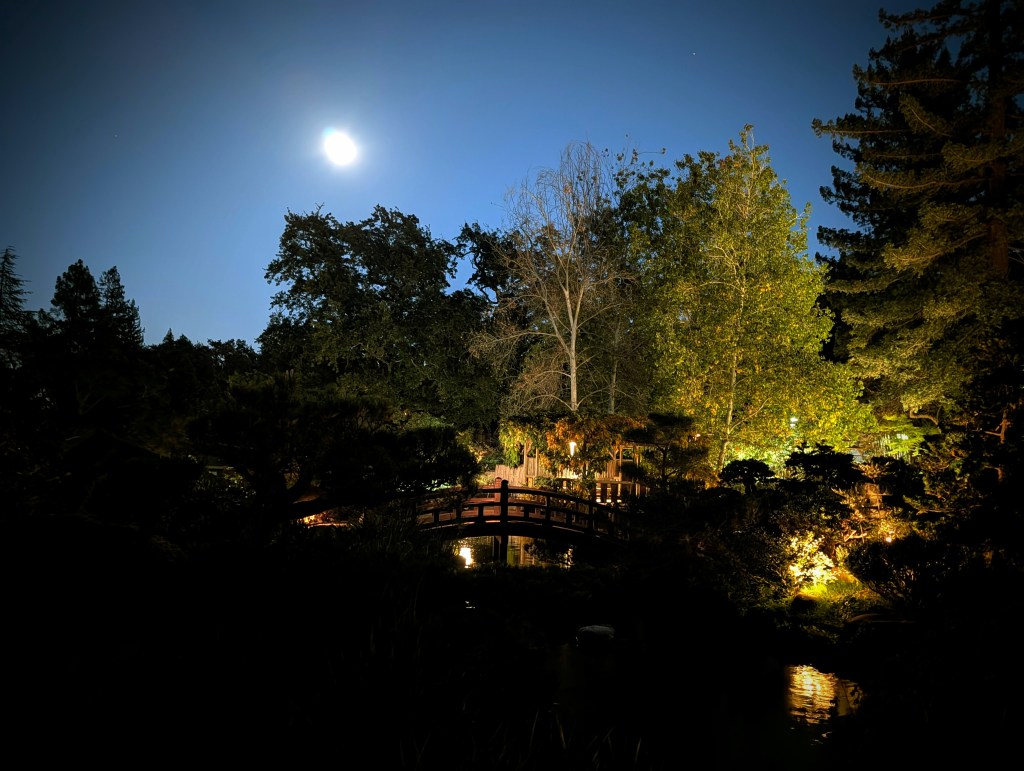
This chant comes through the Zen tradition—especially Rinzai and Sōtō Zen—where it is often chanted before meditation. Here at Hakone, this tradition was lovingly carried forward for many years by Rev. Enyu Ito, whose guidance helped root the practice of Zazen in this garden.
Chanting serves as a threshold between everyday life and practice. It helps us gather our attention, quiet the nervous system, connect with one another, and settle into the present moment. It is also a blessing—a prayer for health, peace, and longevity for ourselves and for others.
We don’t chant to “start” meditation—chanting itself is part of the meditation.
For me, this chant has become like a bridge. It prepares the mind, opens the heart, and reminds me that this practice is not just for myself, but for all beings.
I hope the chant brings you the same sense of grounding and gentle awakening that it has brought me.
 Hakone Zendo