
By Kaz
The Sound That Awakens
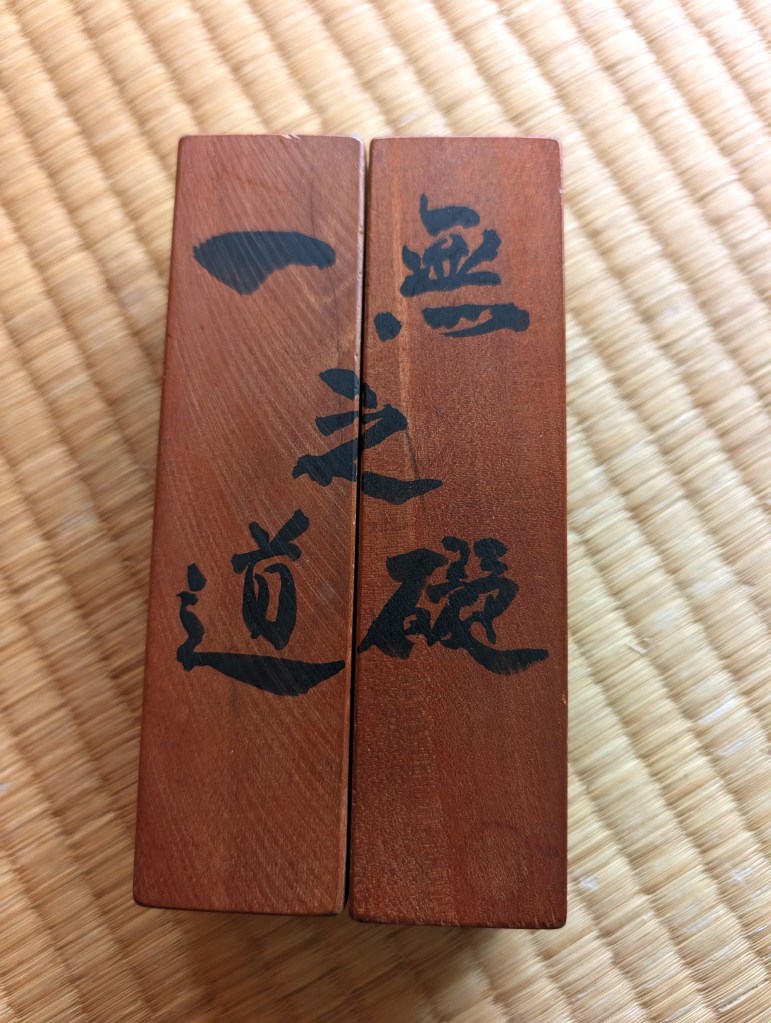
When you join us for zazen, one of the first things you’ll notice is a clear, distinct sound at the beginning of our meditation. This sound is the taku.
The taku originated in China and Japan’s Zen tradition, used in temples to mark the start of activities—especially meditation—so that everyone, often in large halls, would know it was time to begin. The sound helped gather and alert people, a tradition that continues in our practice.
More Than Just Timekeeping
But the taku is not just a way to announce the beginning. In Zen practice, it also carries important meaning. When we hear the taku, it calls us to let go of whatever we’re carrying—distractions, worries, or memories—and pay close attention to the present moment.
The sharp strike is meant to wake us up—not just physically, but to snap us out of mental wandering, so we become aware and attentive, right here and now.
Cutting Through Obstacles
During meditation, there are two classic difficulties:
Sanjin (散心): a scattered mind. Our thoughts may wander in every direction. Under sanjin, there’s also moso (妄想), which is more about disruptive or delusive thinking—worries about the future or regrets from the past—things we’re trying to leave outside the zendo.
Konjin (昏沈): sleepiness or dullness, especially in the early mornings, when it’s easy to feel drowsy.
無礙之一道 (Muge No Ichido) — The Unobstructed Path
There’s a bit of mystery to our own taku: it’s inscribed with 無礙之一道 (むげのいちどう, Muge no Ichido).
For years, its meaning wasn’t immediately clear, and I discovered that it isn’t originally a Zen phrase, but comes from Jodo Shinshu (Pure Land Buddhism), a tradition also practiced by Rev. Ito, who brought the inscription to our zendo.
When we meditate, we practice letting thoughts and worries come and go. We try to keep an open mind, as if walking on a clear and unobstructed path.
Muge (無礙) means “without obstacles” or “unhindered”
Ichidō (一道) means “one path” or “single road”
So, Muge Ichido means “a path with no obstacles.” This phrase comes from the Pure Land Buddhist tradition, known in Japanese as Jōdo Shinshū (浄土真宗), which Rev. Ito also practiced alongside Rinzai Zen.
The phrase beautifully reminds us that there is nothing really blocking our way; the only barriers are the ones we create ourselves. When we enter the zendo and hear the taku, we are reminded to wake up to this moment, to clear our minds, and to recognize that the path ahead is already open.
Letting the Sound Guide Us
Every time you hear the taku, let it remind you:
Wake up to this moment. Let go of barriers and distractions. The path is open right here and now.
 Hakone Zendo