Shared by Lakshmi
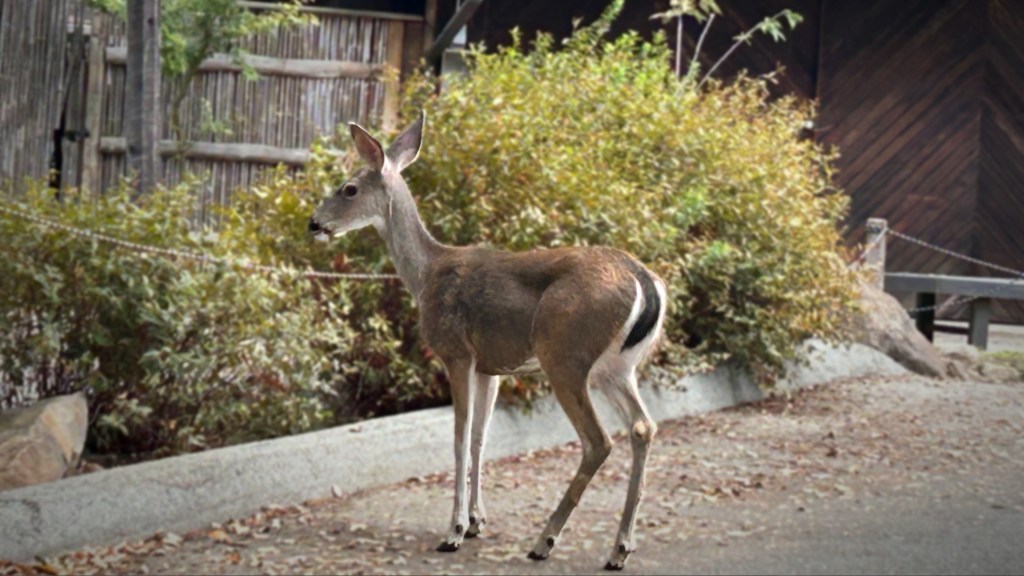
As I was driving up here today I was stopped in my tracks by a family of deer blissfully crossing my path. I felt that given the topic I had chosen for the day, the situation was demanding I embrace a beginner’s mind. I wanted to follow up on a discussion we had had earlier on the “Beginner’s mind” sharing a practical tool I’ve found helpful—the idea is to use your non-dominant hand for everyday tasks. This exercise comes from a book called Mindfulness on the Go by Jan Chozen Bays, which offers various ways to integrate mindfulness into daily life—a perfect complement to meditation, which, if we’re not careful, can be forgotten when we leave the cushion.
The challenge is simple: incorporate your non-dominant hand into ordinary activities like brushing your teeth, combing your hair, or even eating. To challenge yourself you can attempt more difficult tasks like writing or using chopsticks with your non-dominant hand.
To remind yourself you can use a Band-Aid on your dominant hand or place a note on your bathroom mirror.
The author says when they used this in a monastery she visited, the exercise inevitably led to some laughs and brought people to the “Beginner’s Mind”. She says, “Our dominant hand may be forty years old, but the non-dominant hand is much younger, perhaps about two or three years old. We have to learn all over again how to hold a fork and how to get it into our mouth without stabbing ourselves. We might begin to brush our teeth very awkwardly with the non-dominant hand, and when we are not looking our dominant hand will reach out and take the toothbrush or fork away! It is just like a bossy older sister who says “Hey, you little klutz, let me do it for you!” I teach Mindfulness at a center where we tried this exercise – I found my hand was around 5 years old.
Using the non-dominant hand could remind us how much we take for granted the simple movements some people can no longer perform after a disability, injury, or stroke.
Deeper lessons: We discover how ingrained our habits are and how challenging they can be to change without conscious effort. This exercise can teach us patience. We also become more flexible and learn that we’re never too old to acquire new skills. As Zen Master Suzuki Roshe said, “In the beginner’s mind there are many possibilities, but in the expert’s there are few.” The author concludes aptly – “Mindfulness enables us to keep returning to the unlimited possibilities that are always emerging from the great birthing place of the present moment”
 Hakone Zendo