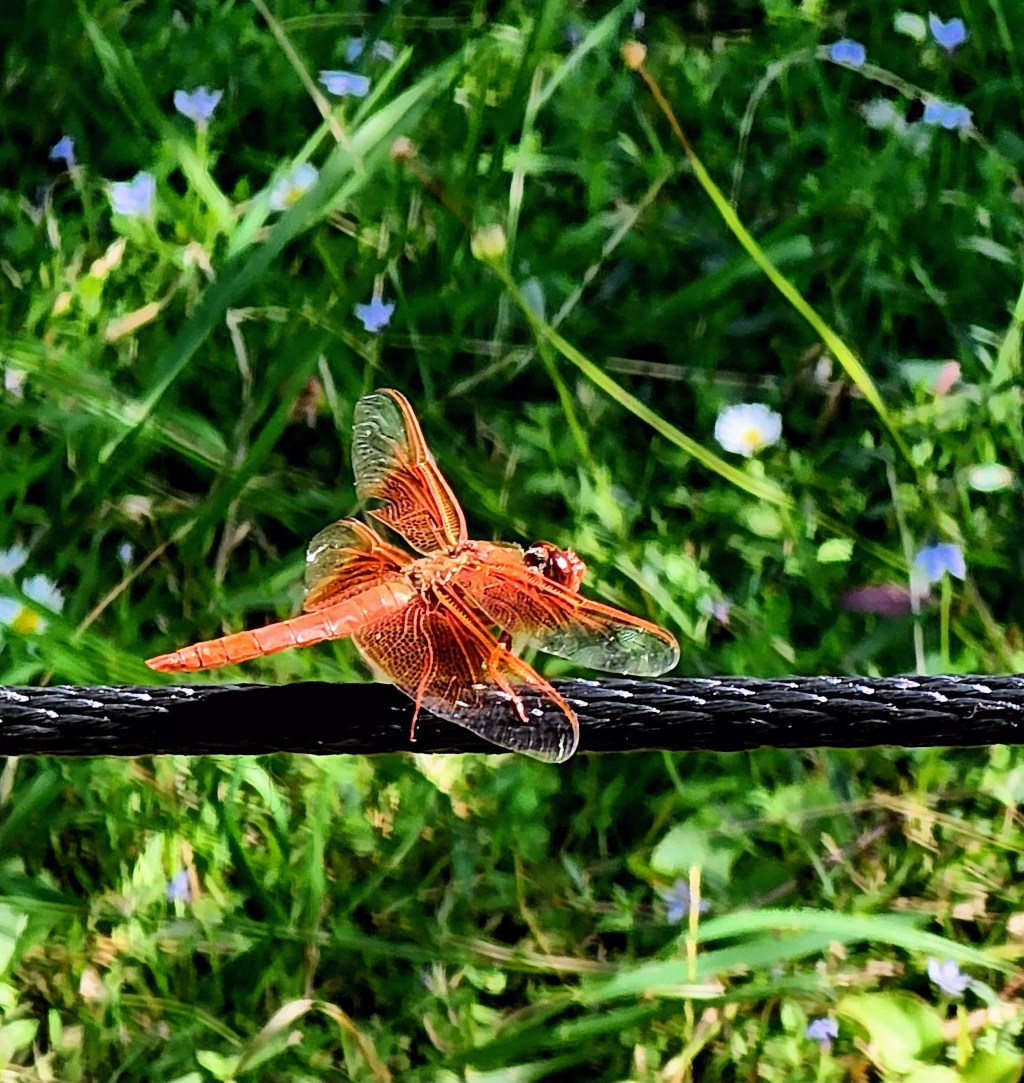
Photo by Sondra
Sharing by Ann
Rev. Ito once described the hatching of a chick by saying that Momma henpecks from outside the shell while the unborn chick pecks in the same place from inside the shell….causing a rupture in the shell and the subsequent hatching of the chick.
According to Google, this is not really the phenomenon that occurs. So what was the teaching Rev. Ito was sharing with us? Having missed the opportunity to question him further about this, I began my own wonder of what he might have been teaching.
Rev. Ito’s life as a priest began in Japan, where he trained for many years. I don’t know his history of the sect or sects of Buddhism of that training except for short snippets that he occasionally shared. Upon living in San Jose, he was associated with the San Jose Buddhist Church Betsuin, which follows the Shinshu school of Pure Land Buddhism. At some point, he traveled to Dai Bosatsu Zendo in New York, where he either learned or furthered his interest in the Rinzai Zen tradition. The Rinzai tradition can seem the polar opposite of the Pure Land tradition.
In the various sects of Buddhism, beginning with the writings of the Dhammapadda (first written verses ascribed to Shakyamuni Buddha) to Zen today, there exists a tension between the realized “cause” of salvation/enlightenment. Is our intention to change fueled by Tariki (“other power”) or is our change fueled by Jiriki (“self or individual power”).
The Pure Land School emphasizes Tariki with a strong faith in our need to call upon Amida Buddha for help/salvation, and the mantra chanted is Namu Amida Butsu. Rev. Ito closed each sitting with a bow, and this chant was repeated 3 times.
At the same time, however, he had left the Pure Land Church and taken up Rinzai, which has a stronger emphasis on the necessity of the student doing the work (zazen and koans) to break the barrier to enlightenment.
Rev. Ito’s story has become a koan for me….What causes the shell to break? Momma hen? Chick? Both?
Intellectually I can come up with some possible ideas: Zen stories are often confusing…no right answer, no wrong answer, just don’t know. But with his integration of 2 likely polarities (other vs. self) he presents an image that invites the possibility of personalizing for the student and their individual path, which includes changes along the way. At one point in my own journey, Rinzai was a most important part…primarily due to Rev. Ito’s influence. (It’s up to me! Yes…No) As I move on my Path, there is a change in the order of words: (It’s up to me! No….Yes)
Again, Zen stresses no duality, so in effect, both Yes and No are present, just with a different emphasis at any given time or situation. Zazen, for me is the teacher for the need for awareness and acceptance….realizing the “don’t know” that Zen teaches.
I am grateful to Rev. Ito as he continues to teach me, even though not physically present.
 Hakone Zendo